Understanding AC Compressor Engagement
Compressor engagement relies on a functional clutch‚ activated by electrical power and controlled by various sensors. Manual engagement‚ using a jumper wire to the dark green wire‚ bypasses these systems.
This temporary fix confirms if the clutch itself is operational‚ but doesn’t address underlying issues like low refrigerant or faulty switches‚ requiring further diagnostics.
What Prevents Compressor Engagement?
Several factors can hinder AC compressor engagement‚ extending beyond a simple clutch failure. A primary culprit is often low refrigerant levels‚ triggering the low-pressure switch to prevent compressor operation – protecting it from damage. Conversely‚ excessively high pressure on the high side can activate the high-pressure switch‚ achieving the same result.
The evaporator temperature sensor plays a crucial role; if it detects freezing conditions‚ it will disable the compressor. A failing AC compressor relay can also interrupt the electrical signal needed to energize the clutch. Furthermore‚ the vacuum switch valve (VSV)‚ impacting engine idle‚ can indirectly affect compressor engagement.
Wiring issues‚ particularly with the pink‚ dark green‚ and green/white stripe wires associated with the relay‚ can disrupt power delivery. Remember‚ the clutch relies on a grounded circuit to disengage‚ so a faulty ground can also prevent operation. Manual engagement‚ while diagnostic‚ won’t resolve these underlying problems.
The Role of the AC Clutch
The AC clutch is the electromagnetic heart of the system‚ responsible for physically connecting the compressor to the engine’s drive belt. It doesn’t constantly run; instead‚ it engages and disengages as needed to regulate cooling. Power is supplied to the clutch coil‚ creating a magnetic field that pulls the clutch plate inward‚ establishing the connection.
Crucially‚ the clutch doesn’t directly receive constant power. Instead‚ a ground signal controls its operation – the absence of ground activates the clutch. A voltmeter/ohmmeter is essential for testing the coil’s resistance‚ identifying potential internal failures. If power reaches the clutch but it remains disengaged‚ the coil is likely the issue.
Manual engagement‚ achieved by directly applying power to the dark green wire‚ bypasses the normal control circuit‚ directly testing the clutch’s mechanical function. However‚ this only confirms if the clutch can engage‚ not why it wasn’t engaging automatically.

Diagnostic Steps Before Manual Engagement
Prior testing is crucial! Check for power at the compressor‚ test the clutch coil resistance‚ and inspect low/high-pressure switches and the evaporator temperature sensor first.
Checking for Power at the Compressor

Before attempting to manually engage the AC compressor‚ verifying power delivery is paramount. The shop initially stated power is reaching the compressor‚ but independent confirmation is wise‚ given potential misdiagnosis. Locate the compressor’s wire connector – it has two pink wires‚ a dark green wire‚ and a dark green wire with a white stripe.
Using a multimeter‚ check for 12V DC between the dark green wire and a solid ground. If voltage is present‚ the issue isn’t a simple power supply problem. However‚ if no voltage is detected‚ trace the wiring back towards the AC compressor relay and the relevant fuses‚ checking for breaks or corrosion. Remember‚ the ground is controlled to turn the clutch on and off‚ so a faulty ground can also prevent engagement.
A wiring diagram is invaluable for this step‚ allowing you to accurately identify the correct wires and trace the circuit. Don’t solely rely on the initial shop’s assessment; a second opinion‚ starting with this basic power check‚ is a prudent approach.
Testing the AC Clutch Coil Resistance
If power is confirmed at the compressor‚ the next step is evaluating the AC clutch coil’s resistance. A faulty coil prevents the magnetic field necessary to engage the clutch‚ even with power applied. Disconnect the electrical connector at the compressor’s front side – carefully noting the wire positions for reassembly.
Using a multimeter set to the Ohms (Ω) setting‚ measure the resistance across the terminals of the clutch coil. The expected resistance value varies by vehicle‚ so consult a repair manual for the specific specification. A reading of zero Ohms indicates a short circuit‚ while infinite resistance suggests an open circuit – both signify a failed coil.
A resistance value significantly outside the specified range also points to coil failure. If the coil tests bad‚ clutch replacement is necessary. This test‚ combined with the power check‚ helps pinpoint whether the problem lies within the compressor itself or elsewhere in the AC system.
Inspecting the Low-Pressure Switch
The low-pressure switch is a critical safety component‚ preventing compressor damage by disabling it when refrigerant levels are insufficient. It’s often the first point of failure in AC systems. To inspect it‚ locate the switch – typically found on the suction line‚ near the evaporator.
With the AC system off‚ disconnect the electrical connector to the switch. Using a multimeter set to continuity‚ test the switch’s terminals. Continuity should exist only when the pressure within the system is above a certain threshold (specified in the vehicle’s service manual).
If no continuity is present with adequate pressure‚ the switch is faulty and needs replacement. Low refrigerant levels can cause the switch to open‚ but simply recharging isn’t always the solution; a leak must be identified and repaired. Remember‚ the switch protects the compressor‚ so a functioning one is vital.
Evaluating the High-Pressure Switch
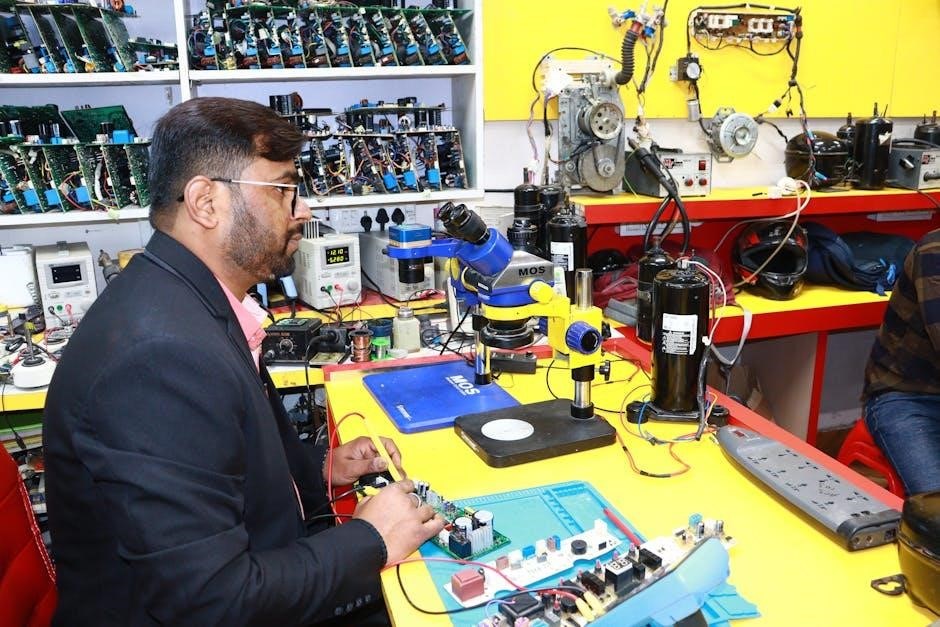
Similar to the low-pressure switch‚ the high-pressure switch safeguards the AC system‚ but from excessively high refrigerant pressures. Located on the discharge line‚ it cuts power to the compressor if pressure exceeds safe limits‚ preventing component failure. Diagnosis involves checking for continuity with a multimeter.
However‚ unlike the low-pressure switch‚ testing the high-pressure switch requires simulating high-pressure conditions‚ which isn’t easily done without specialized equipment. A common symptom of a failing high-pressure switch is the compressor not engaging‚ even with sufficient refrigerant.
High pressures can result from overcharging the system‚ a blocked condenser‚ or a failing compressor. Before replacing the switch‚ verify the system isn’t overcharged and that airflow through the condenser isn’t restricted. A faulty high-pressure switch is often a symptom‚ not the root cause‚ of a larger issue.
Verifying the Evaporator Temperature Sensor
The evaporator temperature sensor monitors the temperature inside the evaporator core‚ preventing it from freezing up. A frozen evaporator restricts airflow and can damage the system. This sensor sends a signal to the AC control module‚ influencing compressor engagement. If the sensor reports excessively low temperatures‚ the module will disengage the compressor.
Diagnosis requires a scan tool capable of reading live data from the sensor. Verify the temperature reading is reasonable while the AC is running. An inaccurate or consistently low reading indicates a faulty sensor. Resistance checks with a multimeter can also confirm functionality‚ comparing readings to manufacturer specifications.
A failing evaporator temperature sensor can mimic other AC problems‚ making accurate diagnosis crucial. It’s essential to rule out other potential causes‚ like low refrigerant‚ before replacing the sensor. Proper sensor function ensures efficient cooling and prevents costly damage.
Examining the AC Compressor Relay
The AC compressor relay acts as an electrical switch‚ providing the necessary current to engage the compressor clutch. It’s controlled by the AC control module‚ receiving signals from various sensors. A faulty relay can prevent the compressor from engaging‚ even if power reaches the compressor itself.
Locate the AC compressor relay – often found in the under-hood fuse box. Visually inspect it for any signs of damage‚ like burning or corrosion. A simple test involves swapping the AC relay with an identical relay from a non-critical system. If the AC now functions‚ the original relay is defective.
Alternatively‚ use a multimeter to check for voltage at the relay’s control circuit when the AC is turned on. Also‚ verify continuity through the relay’s switching contacts. The relay group has two pink wires‚ a dark green wire‚ and a dark green wire with a white stripe. Remember‚ manual engagement bypasses the relay‚ confirming clutch functionality‚ not relay operation.

Manually Engaging the AC Compressor – A Cautionary Approach
Directly powering the compressor clutch with a jumper wire confirms its operability‚ but is a temporary diagnostic step. It bypasses safety features and shouldn’t be a long-term solution.
Locating the Compressor Wire Connector
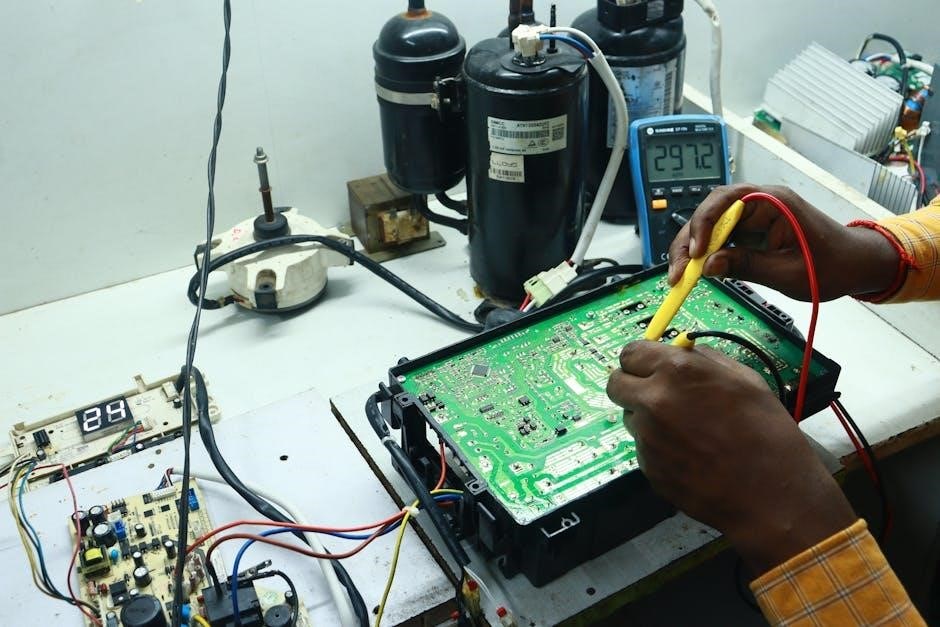
Identifying the correct wire connector is crucial for safely and effectively attempting manual engagement of the AC compressor. The connector you’re looking for is typically located on the front side of the compressor itself. It’s a relatively small‚ single-wire connector‚ designed for easy access during service procedures.
Specifically‚ this connector features two pink wires‚ alongside a dark green wire‚ and another dark green wire distinguished by a white stripe. It’s important to positively identify this connector before proceeding‚ as incorrect wiring could potentially damage the system. Visual confirmation‚ comparing it to images found online‚ is highly recommended.
Take care when disconnecting the connector; avoid excessive force. Once located and disconnected‚ you’ll be prepared to attach the jumper wire for the temporary engagement test. Remember‚ this is a diagnostic step‚ not a repair‚ and should be performed with caution and understanding of the potential risks involved.
Using a Jumper Wire for Temporary Engagement
To initiate temporary engagement‚ you’ll need a jumper wire – a length of insulated wire capable of safely conducting electricity. Once the compressor’s wire connector is unplugged‚ the jumper wire’s primary function is to bypass the control circuit. Attach one end of the jumper wire directly to the dark green wire within the compressor’s wire connector. This wire is the designated power supply line for the AC clutch.
Ensure a secure connection; a loose connection won’t provide sufficient power to engage the clutch. The other end of the jumper wire will then be connected to the positive terminal of your vehicle’s battery. This provides the necessary voltage to activate the clutch coil.
Observe carefully for any signs of engagement – a click from the compressor‚ or the pulley beginning to spin with the compressor center. If nothing happens‚ further diagnostics are needed. Remember‚ this is a test‚ and prolonged operation isn’t advised.
Connecting to the Positive Battery Terminal
After securely attaching the jumper wire to the dark green wire at the compressor connector‚ the next crucial step involves connecting the other end to the positive terminal of your car’s battery; Exercise extreme caution during this process; ensure the vehicle is turned off and that no metal parts of the jumper wire are touching any grounded metal surfaces.
A direct connection to the positive terminal provides the necessary 12-volt power to energize the AC compressor clutch coil. Observe closely for any immediate reaction from the compressor – a distinct clicking sound often indicates the clutch is attempting to engage. If the compressor doesn’t engage‚ double-check all connections and ensure the jumper wire is making solid contact.
This temporary connection is solely for diagnostic purposes; avoid prolonged operation as it bypasses safety mechanisms. Disconnect immediately after confirming clutch functionality.

Potential Issues & Further Troubleshooting
If manual engagement works‚ suspect low refrigerant‚ a faulty pressure switch‚ or an evaporator temperature sensor issue. Oil addition may also be necessary during recharge.
Low Refrigerant Levels & Oil Addition
Successfully engaging the compressor manually often points towards insufficient refrigerant as a primary culprit. When levels are low‚ the low-pressure switch prevents engagement to protect the system from damage. However‚ simply recharging isn’t always enough; the system also relies on refrigerant oil for lubrication.
During operation‚ refrigerant carries oil throughout the AC system. A leak‚ causing refrigerant loss‚ simultaneously depletes the oil supply. Therefore‚ when recharging‚ it’s crucial to add 4-6 ounces of the recommended oil into the suction side of the system. This ensures adequate lubrication for the compressor and other components.
Neglecting oil addition can lead to premature compressor failure‚ even after a successful recharge. The type of oil used is also critical; consult your vehicle’s service manual for the correct specification (typically PAG oil or POE oil). Proper oil level is vital for long-term AC system health and efficient cooling performance.
Vacuum Switch Valve (VSV) Testing
The Vacuum Switch Valve (VSV) plays a crucial role in AC system operation‚ influencing idle speed when the compressor engages. Testing its functionality can reveal if it’s contributing to compressor engagement issues‚ even if manual engagement succeeds.
Disconnecting the vacuum hose between the VSV and the air plenum provides a diagnostic opportunity. With the AC off‚ disconnecting the hose should cause a noticeable drop in engine idle. However‚ if the AC is manually engaged (compressor clutch activated)‚ and disconnecting the hose yields no idle change‚ it suggests a potential VSV malfunction.
This is a challenging test‚ as manually revving the engine is needed to maintain compressor engagement during disconnection. The lack of idle change indicates the VSV isn’t properly controlling vacuum to the intake manifold‚ potentially preventing the engine from compensating for the compressor’s load. Further investigation‚ including checking for vacuum leaks‚ is then necessary.
Identifying Wiring Diagram Specifics (Pink‚ Dark Green‚ Green/White Stripe Wires)
Understanding the AC compressor wiring is vital for both diagnostic testing and manual engagement. The compressor connector typically features a specific color configuration: two pink wires‚ one dark green wire‚ and a dark green wire with a white stripe.
When attempting manual engagement‚ the focus is on the dark green wire. This wire is the designated point for applying power to activate the compressor clutch. Connecting a jumper wire from the positive battery terminal to this dark green wire bypasses the normal control circuit‚ forcing the clutch to engage – if it’s functional.
The pink wires are generally associated with the control signal‚ while the green/white striped wire often serves as a ground. Accurate identification of these wires‚ referencing a vehicle-specific wiring diagram‚ is crucial to avoid damaging the system. Incorrect wiring can lead to blown fuses or compressor damage.
Addressing Idle Changes During VSV Disconnection
The Vacuum Switch Valve (VSV) plays a role in maintaining engine idle when the AC compressor engages‚ influencing vacuum pressure within the system. Disconnecting the vacuum hose connected to the VSV can reveal valuable diagnostic information‚ but also presents complexities in interpreting idle behavior.
Notably‚ disconnecting the hose while the AC is running and manually revving the engine may not demonstrate a significant idle change. This is because the manual revving masks the subtle adjustments the engine control unit (ECU) makes. However‚ disconnecting the hose without the AC compressor engaged typically causes a noticeable drop in idle speed.
This discrepancy highlights the importance of controlled testing. A stable idle drop upon VSV disconnection (without AC) suggests the valve is functioning as intended‚ regulating vacuum. Lack of change could indicate a faulty VSV or issues within the vacuum lines themselves‚ potentially hindering proper compressor engagement.
Long-Term Solutions & Professional Repair
Manual engagement is a diagnostic step‚ not a fix. A professional diagnosis is crucial to address the root cause – low refrigerant‚ faulty sensors‚ or a failing clutch.
Proper repair ensures efficient cooling and prevents further damage to the AC system‚ offering a lasting solution.
Why Manual Engagement is a Temporary Fix
Manually engaging the AC compressor‚ while helpful for diagnostics‚ is fundamentally a temporary workaround and should never be considered a permanent solution. Bypassing the vehicle’s control systems with a jumper wire only confirms whether the clutch itself is capable of engaging when directly powered.
It completely disregards the reasons why the system isn’t engaging normally. These reasons are often safety mechanisms designed to protect the compressor from damage. Low refrigerant levels‚ for example‚ can cause the low-pressure switch to disengage the compressor to prevent internal damage. Similarly‚ a faulty evaporator temperature sensor or an overpressure situation detected by the high-pressure switch will also prevent engagement.
Furthermore‚ manually engaging a compressor with low refrigerant can lead to oil starvation‚ accelerating wear and potentially causing catastrophic failure. Adding 4-6 ounces of recommended oil to the suction side‚ as suggested‚ is a separate repair step‚ not a solution enabled by manual engagement. Essentially‚ you’re masking a problem‚ not fixing it‚ and potentially creating more expensive issues down the road.
Therefore‚ while useful for initial troubleshooting‚ manual engagement should always be followed by a comprehensive professional diagnosis and repair.
Seeking Professional Diagnosis and Repair
After confirming the AC clutch engages manually‚ a thorough professional diagnosis is crucial. A qualified technician possesses the tools and expertise to pinpoint the root cause of the initial failure‚ going beyond simply verifying clutch functionality.
This includes a comprehensive system check‚ evaluating refrigerant levels‚ inspecting the low and high-pressure switches‚ and testing the evaporator temperature sensor for accurate readings. Wiring diagrams‚ specifically identifying wires like the pink‚ dark green‚ and green/white stripe wires‚ are essential for tracing electrical faults.
The technician will also assess the vacuum switch valve (VSV) operation‚ noting idle changes upon disconnection – even the nuances of manual revving during testing are important. They can accurately determine if the issue lies within the electrical system‚ the refrigerant circuit‚ or a faulty component.
Don’t rely on temporary fixes; a professional repair ensures long-term reliability and prevents further damage; Accepting a recharge without proper diagnosis‚ as some shops may do‚ is insufficient and potentially harmful. Invest in a complete solution for lasting AC performance.