
The MPC Live 2 is a standalone music production station‚ offering a complete workflow with included software like Pro Tools First and Ableton Live Lite;
This powerful device‚ detailed in a 354-page manual (dated January 29‚ 2022)‚ allows for seamless integration and control‚ as demonstrated with Ableton Live 10.1.2 or later.
What is the MPC Live 2?
The MPC Live 2 represents a fully integrated standalone music production experience‚ eliminating the need for a computer to begin crafting beats and songs. It’s a sophisticated instrument detailed extensively in a comprehensive 354-page user manual‚ last updated January 29‚ 2022. This manual serves as a crucial resource for understanding its capabilities.
Essentially‚ it’s a groove production studio combining the iconic MPC workflow with powerful sampling‚ sequencing‚ and sound design tools. The system includes bundled software – Pro Tools First M-Audio Edition and Ableton Live Lite – providing immediate access to industry-standard digital audio workstations.
Beyond standalone operation‚ the MPC Live 2 excels as a controller for software like Ableton Live‚ offering deep integration for hands-on control. The documentation highlights its ability to control Ableton Live 10.1.2 and later versions‚ streamlining the creative process. It’s designed for both seasoned producers and those new to music creation‚ offering a versatile platform for musical expression.
Key Features and Capabilities
The MPC Live 2‚ thoroughly documented in its 354-page manual (dated January 29‚ 2022)‚ boasts a robust feature set. Core capabilities include advanced sampling‚ allowing for importing and manipulation of audio. It excels in sequencing‚ enabling the creation of complex rhythmic patterns and melodic lines.

A significant feature is its standalone operation‚ removing reliance on a computer. However‚ it also functions seamlessly as a controller‚ particularly for Ableton Live (versions 10.1.2 and later)‚ offering deep integration. The manual details how to configure this control effectively.
Furthermore‚ the MPC Live 2 supports VST plugins‚ expanding its sonic palette. It offers flexible audio connectivity‚ with outputs including Stereo Out and Out 3 (as referenced in the manual regarding the MPC Renaissance). Included software‚ Pro Tools First and Ableton Live Lite‚ provides a complete production environment right out of the box‚ making it a versatile and powerful tool.
System Requirements & Included Software (Pro Tools First‚ Ableton Live Lite)
The MPC Live 2’s versatility extends to its software ecosystem. Included with the unit are Pro Tools First M-Audio Edition and Ableton Live Lite‚ providing immediate music creation capabilities. These are designed to get users started without additional purchases.
For computer integration‚ the manual details compatibility with Ableton Live 10.1.2 and later versions‚ enabling comprehensive control. While specific system requirements for the bundled software are detailed within each program’s documentation‚ the MPC Live 2 itself operates independently‚ minimizing external dependencies.

The 354-page manual (dated January 29‚ 2022) focuses on the hardware and its interaction with software‚ rather than exhaustive software specifications. Users should consult the individual Pro Tools First and Ableton Live Lite documentation for detailed system requirements and optimal performance guidelines. This ensures a smooth and productive workflow.

Hardware Overview
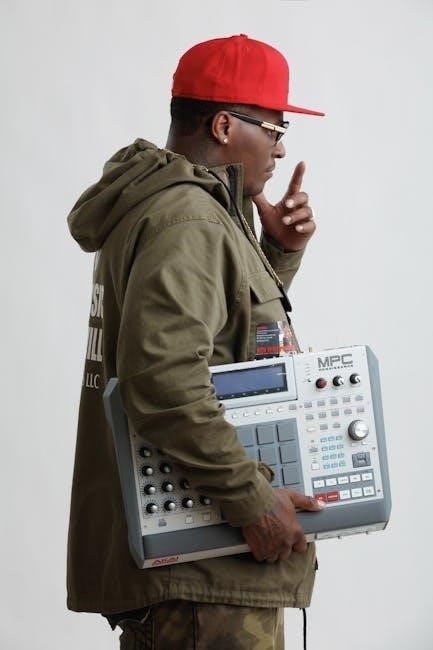
The MPC Live 2 features front panel controls – pads‚ knobs‚ and buttons – alongside rear panel connections including stereo and additional audio outputs‚ MIDI‚ and USB ports.
Front Panel Controls: Pads‚ Knobs‚ and Buttons

The MPC Live 2’s front panel is designed for intuitive‚ hands-on control. The responsive pads are central to performance and sequencing‚ enabling finger drumming‚ sample triggering‚ and step sequencing with precision. These pads are velocity and pressure sensitive‚ allowing for expressive performances.
Surrounding the pads are an array of knobs‚ providing real-time control over parameters like volume‚ pan‚ filter cutoff‚ and effects sends. These knobs offer tactile adjustments‚ crucial for shaping sounds on the fly. Dedicated buttons provide quick access to essential functions such as muting‚ soloing‚ and program/sequence selection.
The layout is optimized for efficient workflow‚ ensuring that key controls are readily accessible. The combination of pads‚ knobs‚ and buttons facilitates a dynamic and engaging music creation experience‚ allowing producers to sculpt their sounds and performances with ease. The 354-page manual details each control’s functionality.
Rear Panel Connections: Audio Outputs (Stereo Out‚ Out 3)‚ MIDI‚ USB
The MPC Live 2 offers comprehensive connectivity options on its rear panel. Stereo outputs deliver the main mix to studio monitors or a sound system‚ providing a balanced audio signal. Additional ‘Out 3’ outputs offer expanded routing possibilities for complex setups‚ allowing for separate signal paths or headphone mixes.
MIDI In and Out ports enable synchronization and control with external synthesizers‚ drum machines‚ and other MIDI-compatible devices. This facilitates integration with existing hardware setups‚ expanding the creative possibilities. A USB port serves multiple functions‚ including connecting to a computer for file transfer‚ software updates‚ and MIDI communication.
The USB connection allows the MPC Live 2 to function as an audio interface‚ streamlining the production process. As detailed in the 354-page manual‚ these connections ensure versatility and seamless integration within a variety of studio environments.
Internal Components: Storage‚ RAM‚ and Expansion Slots
The MPC Live 2 boasts robust internal components designed for demanding music production. While specific storage capacity isn’t detailed in the provided excerpts‚ the device is designed for storing samples‚ sequences‚ and projects directly onboard‚ eliminating the need for constant computer connection.
Sufficient RAM ensures smooth operation during complex arrangements and when utilizing multiple plugins. The system’s architecture supports efficient processing of audio data‚ crucial for real-time performance and manipulation. Expansion slots‚ though not explicitly specified in the given information‚ suggest the potential for future upgrades or increased storage capacity.
These internal features‚ as outlined in the comprehensive 354-page manual‚ contribute to the MPC Live 2’s standalone capabilities and its ability to handle large-scale music projects with reliability and speed.
Initial Setup and Configuration
To begin‚ power on the MPC Live 2 and navigate the menus; a factory reset and firmware update might be necessary‚ as detailed in the manual.
Powering On and Basic Navigation
Upon initial power-up‚ the MPC Live 2 will guide you through a brief startup sequence‚ initializing its internal systems and loading essential components. The front panel controls – pads‚ knobs‚ and buttons – become active‚ allowing for immediate interaction with the device. Basic navigation relies heavily on these controls‚ alongside the high-resolution touchscreen display.
The touchscreen provides a visual interface for accessing menus‚ browsing samples‚ and managing projects. Utilize the rotary encoder knob to scroll through options and make selections. The pad bank serves multiple functions‚ including triggering samples‚ entering notes‚ and navigating the file system. Refer to the comprehensive 354-page manual (dated January 29‚ 2022) for a detailed breakdown of each control’s functionality.
Understanding the menu structure is crucial for efficient operation. The main menu provides access to core functions like sampling‚ sequencing‚ mixing‚ and file management. Explore each section to familiarize yourself with the available options and customization settings. Remember to consult the manual for specific instructions and troubleshooting tips.
Factory Reset and Updating Firmware
Performing a factory reset on the MPC Live 2 restores the device to its original settings‚ erasing all user data and customizations. This can be useful for troubleshooting issues or preparing the unit for resale. The procedure is detailed within the extensive 354-page manual (dated January 29‚ 2022)‚ emphasizing the importance of backing up any critical projects beforehand.
Maintaining up-to-date firmware is essential for optimal performance and access to the latest features. Akai regularly releases firmware updates to address bugs‚ improve stability‚ and introduce new functionalities. These updates are typically delivered via USB connection to a computer.
The manual provides clear instructions on how to download and install firmware updates. It stresses the importance of following the update process carefully to avoid potential issues. Interrupting the update can render the device unusable‚ necessitating advanced troubleshooting. Always refer to the official documentation for the most accurate and reliable guidance.
Connecting to a Computer via USB
Establishing a USB connection between the MPC Live 2 and a computer enables several key functionalities‚ including firmware updates‚ sample transfer‚ and data backup. The 354-page manual (dated January 29‚ 2022) details the connection process‚ emphasizing the use of a high-quality USB cable for reliable data transfer.
Upon connection‚ the MPC Live 2 typically appears as a mass storage device on your computer‚ allowing you to directly drag and drop files. It also facilitates communication with software like Pro Tools First M-Audio Edition and Ableton Live Lite‚ included with the unit‚ for seamless integration.
The manual clarifies that the USB connection also supports MIDI functionality‚ enabling the MPC Live 2 to act as a MIDI controller for your computer-based music software. Proper driver installation might be required depending on your operating system‚ as outlined in the documentation.

Core Workflow: Sampling and Sequencing
The MPC Live 2 excels at importing samples and creating programs and sequences‚ offering time stretching and pitch shifting capabilities‚ as detailed in its extensive manual.
Importing Samples and Sounds
The MPC Live 2 streamlines the process of incorporating external audio into your projects. The comprehensive 354-page manual details several methods for importing samples and sounds‚ ensuring a flexible workflow for producers of all levels.
Users can directly import audio files via USB from a computer‚ leveraging compatibility with various file formats. The system supports drag-and-drop functionality‚ simplifying the transfer process. Furthermore‚ the MPC Live 2 allows for sampling directly from external sources‚ capturing audio in real-time.

The manual emphasizes the importance of proper file management‚ offering guidance on organizing samples within the MPC’s internal storage. It also explains how to assign samples to pads‚ creating intuitive performance layouts. Detailed instructions cover adjusting sample start and end points‚ looping‚ and utilizing the time-stretching and pitch-shifting features to manipulate audio creatively. The included software‚ Pro Tools First and Ableton Live Lite‚ also integrate seamlessly with this process.
Creating Programs and Sequences
The MPC Live 2’s core functionality revolves around crafting Programs and Sequences‚ detailed extensively within its 354-page manual (dated January 29‚ 2022). Programs function as the building blocks of your sound‚ housing pads assigned to samples‚ instruments‚ or VST plugins.
The manual guides users through the process of assigning sounds to pads‚ adjusting levels‚ and utilizing effects. Sequences‚ on the other hand‚ arrange these sounds over time‚ forming the rhythmic and melodic structure of your tracks. The MPC Live 2 offers both step sequencing and real-time recording options.
Users can create complex patterns by inputting notes step-by-step or by playing them live on the pads. The manual explains how to adjust timing‚ velocity‚ and swing to achieve desired grooves. Furthermore‚ it details how to arrange sequences into full songs‚ utilizing the MPC’s song mode for structuring compositions. Integration with Ableton Live Lite enhances this workflow.
Time Stretching and Pitch Shifting
The MPC Live 2 provides robust time stretching and pitch shifting capabilities‚ thoroughly documented within its comprehensive 354-page manual (dated January 29‚ 2022). These features are crucial for manipulating samples to fit your project’s tempo and key.
The manual details various algorithms for time stretching‚ allowing users to choose between different quality settings and artifacts. It explains how to adjust the stretch ratio to speed up or slow down samples without significantly altering their pitch. Conversely‚ pitch shifting allows for changing the tonal center of a sample independently of its duration.
Users can explore different pitch shifting modes‚ including polyphonic and monophonic options‚ to achieve optimal results. The manual also covers advanced techniques like formant preservation‚ which maintains the natural character of vocals and other complex sounds during pitch manipulation. These tools are essential for creative sample manipulation and musical experimentation.

Advanced Features
The MPC Live 2’s manual (354 pages‚ January 29‚ 2022) details MIDI control‚ VST plugin integration‚ and project exporting for expanded creative possibilities.
MIDI Control and Integration (Ableton Live Control)
The MPC Live 2 excels in MIDI control‚ offering deep integration with Digital Audio Workstations (DAWs) like Ableton Live. A dedicated section within the 354-page manual (dated January 29‚ 2022) thoroughly explains configuring the hardware to seamlessly control Ableton Live 10.1.2 and later versions.
This integration allows users to map MPC pads‚ knobs‚ and faders to parameters within Ableton Live‚ providing tactile control over instruments‚ effects‚ and mixer elements. The manual details specific setup procedures‚ ensuring a responsive and intuitive workflow. Users can effectively use the MPC Live 2 as a dedicated hardware controller for Ableton Live‚ enhancing performance and production capabilities.
Beyond basic control‚ the manual likely covers advanced MIDI features‚ such as MIDI learn functionality and custom mapping options‚ allowing for personalized control schemes tailored to individual production styles. This level of integration transforms the MPC Live 2 into a central hub for music creation‚ bridging the gap between hardware and software.
Using VST Plugins
The MPC Live 2 significantly expands its sonic palette through VST plugin compatibility. While the provided text doesn’t detail specifics within the MPC Live 2 manual itself‚ it references a document listing over 185 VST plugins usable with DirectX – implying a broad range of potential integration. This suggests the MPC Live 2 supports a diverse selection of virtual instruments and effects.

The manual likely details the process of scanning for and loading VST plugins into the MPC Live 2’s environment. Users can then utilize these plugins within their sequences and programs‚ augmenting the built-in sounds and effects. This capability allows producers to leverage their existing plugin libraries or explore new sonic territories.
Expect the manual to cover plugin management‚ including organization and troubleshooting. Understanding VST plugin integration is crucial for maximizing the MPC Live 2’s creative potential‚ offering a virtually limitless sound design landscape.
Exporting Projects and Sequences
The MPC Live 2 manual comprehensively covers exporting your musical creations. While the provided snippets don’t directly detail export functions‚ the overall nature of a modern music production workstation implies robust export capabilities. Expect detailed instructions on exporting both individual sequences and complete projects.
The manual likely outlines various export formats‚ including WAV‚ MP3‚ and potentially others‚ catering to different distribution needs. It will probably explain options for setting sample rates‚ bit depths‚ and stereo/mono configurations to optimize audio quality for specific platforms.
Furthermore‚ the manual should detail methods for exporting MIDI data‚ allowing for further editing or arrangement in external DAWs like Ableton Live (included as Lite version). Expect clear guidance on managing file naming conventions and directory structures for organized project archiving.